
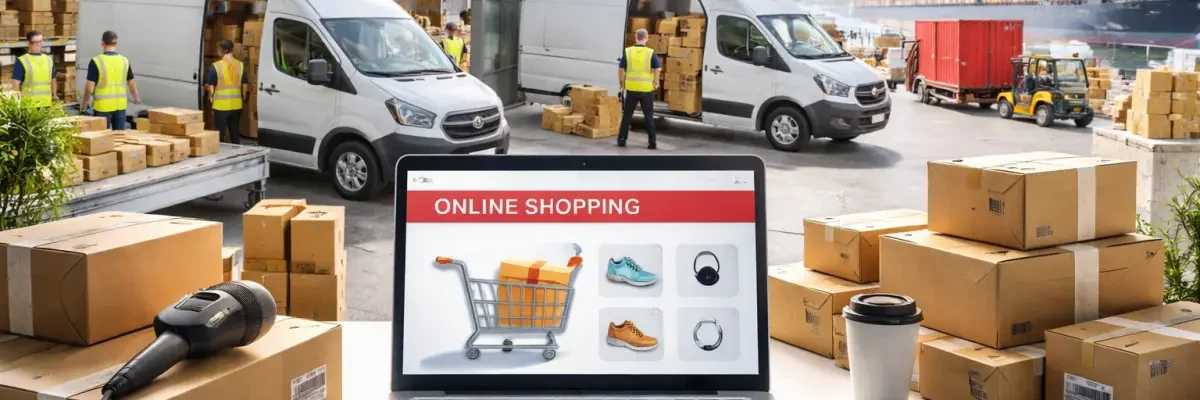
E-commerce has become one of the most important parts of modern business, changing how people buy, sell, and receive products across both local and global markets. In 2026, customers expect more than just an online store. They want speed, reliability, convenience, and delivery options that match their lifestyle. For businesses, this means success no longer depends only on having products online. It depends on how efficiently those products can move from seller to buyer, whether the shipment is domestic or international.
Domestic e-commerce continues to grow because it offers fast access to products within a customer’s own country. Shoppers increasingly expect shorter delivery windows, real-time updates, and an easy ordering process from checkout to doorstep. Businesses that can meet these expectations often build stronger customer trust and improve repeat purchases. Fast domestic fulfillment has become a major advantage, especially for brands competing in crowded online markets where convenience can influence buying decisions just as much as price.
At the same time, international e-commerce is opening new opportunities for both businesses and consumers. Companies are no longer limited to local demand. With the right logistics and cross-border support, even smaller businesses can reach customers in other countries and expand beyond their traditional market. For consumers, international e-commerce creates access to a wider range of products, better pricing options, and unique goods that may not be available locally. This broader digital marketplace has made global shopping feel more immediate and more accessible than ever before.
One of the biggest reasons international and domestic e-commerce services are becoming more valuable is the growing need for smooth logistics. Customers want the online shopping experience to feel simple, but behind that simplicity is a complex chain of coordination involving inventory, packaging, transportation, tracking, and final delivery. A dependable e-commerce service helps connect all of these stages into a more organized system, reducing delays and improving the overall customer experience.
Another major factor shaping e-commerce in 2026 is customer confidence. Buyers are more likely to complete purchases when they feel informed throughout the process. Clear delivery timelines, transparent shipping options, and easy communication all contribute to a stronger sense of trust. This is especially important in international e-commerce, where customers may be concerned about delivery times, customs handling, or product arrival conditions. Services that provide a more reliable and structured delivery experience help remove hesitation and encourage more cross-border transactions.
Technology is also playing a greater role in both domestic and international online shopping. Businesses are using smarter systems to manage orders, forecast demand, optimize delivery routes, and improve communication with customers. Automation is helping reduce manual errors, while better data visibility allows businesses to respond more quickly to shipping challenges or changing customer expectations. As e-commerce continues to evolve, companies that combine digital convenience with dependable fulfillment are likely to remain more competitive.
For modern consumers, convenience is no longer just about finding the right product. It is about receiving that product through a service that feels efficient, secure, and easy to trust. Whether someone is ordering from a local seller or purchasing from another country, the expectation is the same: a simple experience from checkout to delivery. This is why international and domestic e-commerce services are becoming such an essential part of digital business.
Looking ahead, the businesses that stand out will be the ones that understand e-commerce as more than a transaction. It is a complete service experience that includes product discovery, order management, shipping coordination, and customer satisfaction. Domestic and international e-commerce services will continue to shape how brands grow, how consumers shop, and how goods move in an increasingly connected world.
Conclusion
In 2026, e-commerce success is being defined by reach, speed, and reliability. Domestic services help businesses meet rising local demand with faster delivery and better convenience, while international services create new pathways for global growth. Together, they form the foundation of a stronger and more flexible online marketplace. For businesses aiming to grow and for customers expecting better service, international and domestic e-commerce solutions are no longer optional – they are central to the future of online commerce.